Conductor VP Discusses AI Search Optimization Strategies
Patrick Reinhart, VP of Services and Thought Leadership at Conductor, shares insights on achieving success with answer engine optimization. He emphasizes the importance of brand recommendations over rankings.
Original reporting · searchenginejournal.com
Original: “Patrick Reinhart On The Golden Metric In AI Search: Brand Recommendations via @sejournal, @lorenbaker”
Read “Patrick Reinhart On The Golden Metric In AI Search: Brand Recommendations via…” at Search Engine Journal →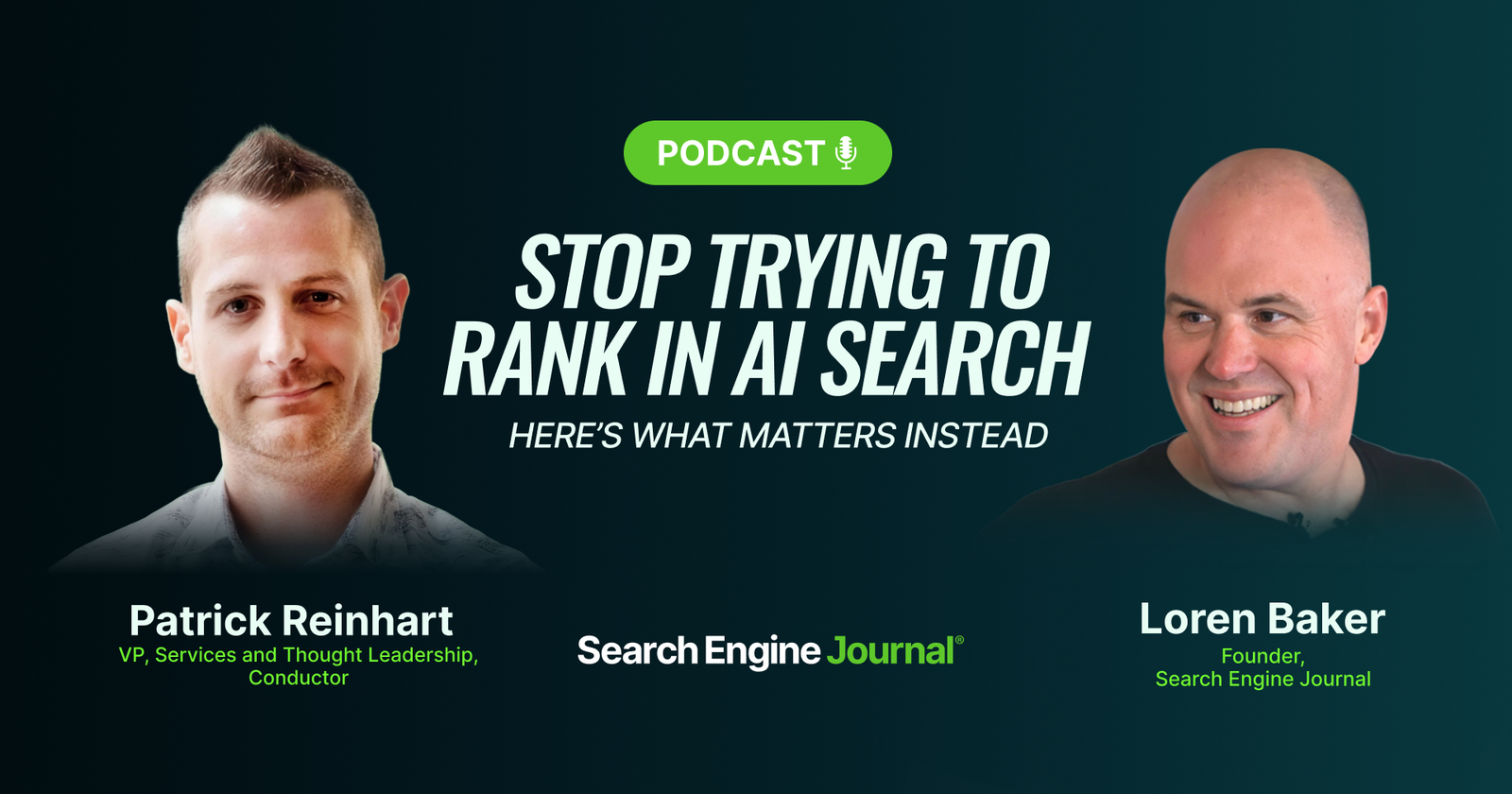
How this was written. Content Delta wrote this article with a language model from Search Engine Journal’s reporting (model: @cf/meta/llama-3.3-70b-instruct-fp8-fast); it describes that reporting rather than adding to it. The original, linked above, is the full story.
Key points from Search Engine Journal’s report
- Conductor's VP of Services and Thought Leadership, Patrick Reinhart, discussed the importance of brand recommendations in AI search optimization.
- Enterprise brands are still learning about AI search and are in the process of testing different technologies and upskilling their internal teams.
- AEO strategies are grounded in traditional SEO strategies but require a distinct approach due to the unique nature of large language models.
- Data fidelity and understanding how different LLMs behave are crucial for successful AEO.
- Brands should focus on building for the future and staying ahead of the curve in AI search.
Patrick Reinhart, VP of Services and Thought Leadership at Conductor, recently joined the SEJ Podcast to discuss the key aspects of answer engine optimization (AEO) for enterprise brands, according to Search Engine Journal. The conversation centered around the differences between citations and recommendations in AI search. Reinhart highlighted that simply being mentioned by an AI answer is not enough if the recommendation goes to a competitor.
Reinhart explained that Conductor is a software company focused on AI visibility and tying it back to recommendations, Search Engine Journal reported. He noted that the company's data platform brings together Search Console, analytics, and monitoring products to provide a comprehensive view of a brand's online presence. As the VP of Services and Thought Leadership, Reinhart oversees the professional services arm of Conductor.
The majority of Conductor's customers are large enterprise organizations, with a heavy focus on finance, insurance, and healthcare, as well as ecommerce and grocery, Reinhart said. He mentioned that companies like H-E-B and BJ's are among their customers. Reinhart emphasized that these enterprise customers are still learning about AI search and are in the process of testing different technologies and upskilling their internal teams.
Reinhart stressed that AEO strategies are grounded in traditional SEO strategies but are measured and thought about differently due to the unique nature of large language models (LLMs), according to Search Engine Journal. He noted that LLMs operate differently from traditional search engines, requiring a distinct approach to optimization. Reinhart also highlighted the importance of data fidelity and understanding how different LLMs behave, such as Claude and Gemini.
During the conversation, Reinhart discussed the challenges of tracking AI search data, particularly with Google making it more difficult for rank-tracking tools to access the necessary information, Search Engine Journal reported. He emphasized the need to build a deterministic set of prompts to get an accurate representation of how a brand shows up across different LLMs. Reinhart also touched on the topic of recommendations, stating that being recommended by an AI is more valuable than just being visible.
Reinhart advised that brands should focus on building for the future and staying ahead of the curve in AI search, according to Search Engine Journal. He suggested that brands should be prepared to invest in their AEO strategies for 2027 and beyond. By doing so, they can ensure they are not only visible but also recommended to their core audience. Reinhart's insights provide valuable guidance for enterprise brands looking to navigate the rapidly evolving landscape of AI search.
Ultimately, Reinhart's conversation on the SEJ Podcast highlighted the complexities and opportunities of AI search optimization, Search Engine Journal reported. As the field continues to evolve, it is essential for brands to stay informed and adapt their strategies to achieve success in this new landscape. By prioritizing recommendations and understanding the unique characteristics of LLMs, brands can position themselves for long-term success in AI search.
Questions and answers
What is the main goal of answer engine optimization (AEO) for enterprise brands?
The main goal of AEO is to achieve brand recommendations, rather than just visibility or rankings, according to Patrick Reinhart.
How do large language models (LLMs) differ from traditional search engines?
LLMs operate differently from traditional search engines, requiring a distinct approach to optimization, as noted by Reinhart.
What is the importance of data fidelity in AEO?
Data fidelity is crucial for successful AEO, as it allows brands to get an accurate representation of how they show up across different LLMs, according to Reinhart.